
Series: Our God Has Scars
- Our God Has Scars: The Father Crushed The Son For Our Redemption (Isaiah 53)
- Jesus Drank The Cup Of God’s Wrath For You…Now You Don’t Have To
Oversimplification and under-explanation are a problem for many baptists. I am one and feel that I can make that claim safely. It comes out of a good heart. There is no deceit involved. But, for the sake of simplification, salvation is often times presented in a way that makes weak believers. Or, it makes believers with weak faith because they have so little of the gospel to hold on to.
We read in the Scriptures something quite scary for us to consider. We read of God’s fierce and righteous anger toward sinners in the Scriptures. Here is why it is scary? If we are without Christ then we are sinners. We are rebels against God. We have sinned and fall short of God’s righteous standard (Romans 3:23). And this means that the justice and wrath of God rests upon us if we are not in Christ.
It is not the love of God that rests most prominently upon the unbeliever, it is His wrath and anger.
“The boastful shall not stand before your eyes; you hate all evildoers.” – Psalm 5:5 ESV
“God is a righteous judge, and a God who feels indignation every day.” – Psalm 7:11 ESV
The relationship between the believer and God is much, much different than that of the unbeliever and God.
“The LORD tests the righteous, but His soul hates the wicked and the one who loves violence.” – Psalm 11:5 ESV
A person might look at this and say, but that’s the Old Testament. That’s not how God is now! To which we would then have to discuss John 3:36. Coming a mere 20 verses past the most well known passage of the Bible comes a verse that should give us pause. It helps us to understand the relationship between us and God. And the picture that is painted here is not pretty.
“Whoever believes in the Son has eternal life; whoever does not obey the Son shall not see life, but the wrath of God remains on Him.” – John 3:36 ESV
What does this say about us. Those who have believed in the Son, they have eternal life. But it is not so for those who do not believe in Christ. For those who have not repented of their sin and trusted in Christ there is a much different reality for you. It says that currently it is the “wrath of God” that is resting upon you. If you have not trusted in Christ then it is not His love, grace, and mercy that is resting upon you it is God’s fierce anger toward sin.
Hearing that God has saved me is helpful, but is not completely helpful. How am I supposed to be assured that God is no longer angry with me? If all I know of the death of Christ is that He died for me then I am left wondering if He is still angry with me.
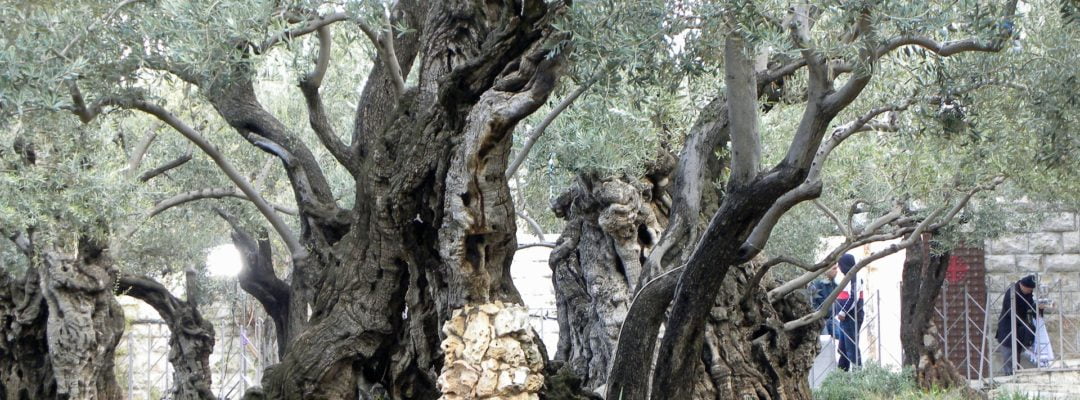
I think that examining what happened at the Garden of Gethsemane helps us to have confidence in the finished work of Christ. I am going to make the case from Scripture and reason that it was God’s wrath that was in the cup. And that is unbelievably good news for us.
Jesus drank the cup of God’s wrath so that we did not have to.
Let us look at Luke 22:39-46.
Jesus is in tremendous anguish in this passage. Anguish is excruciating or acute distress, suffering, or pain. I would say that this, without a doubt, is what Jesus goes through in the Garden of Gethsemane.
Prayer In The Garden
Jesus went to a place that was common for Him to go and pray. As I imagine the scenario going, Jesus probably didn’t have a whole lot of alone time. It is very likely that over the course of the past few years Jesus has had to intentionally make time to get alone with His Father. Whether it be His disciples or the crowds of people that followed Him, I assume He had to be quite intentional about getting alone with God. We also know that this place, this garden, was a spot that Jesus frequented regularly for this purpose. One reason we know this is that as soon as Jesus is finished praying Judas had known exactly where Jesus would be to betray Him.
So, Jesus is in this place that seems to be sacred to Him. This is the place He goes to get away from everyone and pray. Here He asked the disciples to pray and then He went off Himself to pray. Jesus prayed earnestly that this cup would pass away from Him. As He prayed an angel came to strengthen Him. To me this is an interesting event, but Luke treats it very much as a side note. Angels are God’s messengers. It is apparent that Jesus needed aid because apparently His Father sent an angel there to “strengthen Him”.
In agony, Jesus did not rise when the angel came to strengthen Him. He prayed even more earnestly, so much so that He was actually sweating during His prayer. As He continued to pray the sweat turned into blood. Jesus was sweating drops of blood on the ground. Sweating blood is a rather rare condition that occurs when someone is under extreme stress. I’d say that what Jesus is going through qualifies as just that.
What Is The Anguish Over?
I believe that when we get to the bottom of whatever this cup is that Jesus is asking to have taken from Him we will gain an understanding of what He is in anguish over. It is obvious as we read this passage that the cup is what is causing Him great trouble. The problem is that it is not evident from the immediate passage just what this cup is.
However, we do know this. Whatever it is, it is horrific. And, knowing what lies ahead of Jesus’s life helps us to understand what was in the cup. At the end of our examination we will also look at what the cup represents from the pages of Scripture to understand Jesus’s anguish at Gethsemane.
The Anguish of Physical Torment
I am sure that the anguish of physical torment weighed heavily upon Jesus’ mind. He had already told His disciples on a few occasions that He would soon die. In a few hours everything that He had said would happen was about to happen.
I am sure that the pain of being beaten weighed heavily upon Him. Jesus would soon be beaten by fists. Bruises would produce and blood would flow after being hit in the face. Jesus would feel great pain when a crown of thorns was beat down upon His head. And, He was going to face more pain than I can imagine right now, as the flesh on His back was ripped and torn into by the leather straps with pieces of bone and glass.
I am also certain that the horror of dying on a cross weighed heavily upon Him. After being beaten, nearly to death, He would have to drag that Roman cross to the hill called Golgotha. He was so weak that He could not make it. He had to have help to get there. When He arrived, He was thrown upon the cross and nailed to it. Nails were driven through His wrists and one in the top of His foot. Here He would die from asphyxiation. Here is a description from National Geographic.
“But of all those effects, the most lethal effect of crucifixion was that it was designed to interfere with a condemned prisoner’s ability to breathe.”
The beatings likely made it harder for Jesus to breathe. It is very likely that He had lacerated and collapsed lungs and damaged muscles throughout his body making it even more difficult to breathe and quite painful.
Some people were attached to the cross with a rope, but Jesus and some others were not. The National Geographic article goes on to discuss the agonizing process in detail.
“It is thought that the feet were nailed vertically to the upright beam with the knees bent at around 45 degrees….as the cross beam was put into place, the prisoner’s thigh muscles would eventually fail, so that he couldn’t support himself with his legs. That, in turn, transferred his body weight to his arms, pulling his shoulders from their sockets. He was left in a position in which his chest and rib cage were thrust forward. As Jeremy Ward, a physiologist at King’s College London explained to the Guardian newspaper in 2004: “The weight of the body pulling down on the arms makes breathing extremely difficult.”…As the prisoner struggled to get air, the lack of oxygen in the blood would damage his body’s tissues and blood vessels. That, in turn, would allow fluid to diffuse out of the blood into the tissues, including the lungs and heart sac. The lungs would stiffen, and the pressure around the heart would make it more difficult to pump. The decreased oxygen also would damage the heart muscle, which could cause cardiac arrest. Either way, an agonizing death eventually would result.”
When I ponder the physical torment that Jesus was about to face, I begin to understand a bit of the stress that Jesus was undergoing. Or, I should say I can think about it and understand why He would feel so stressed. This had to be part of what Jesus was stressed about.
But, let me pose a question here. Do you believe that this was what was in the cup? Do you believe that it was simply physical torment that was causing Jesus so much anguish? I do not. Though the physical torment is great, it either has to be more or it has to be something else. Many people have died for the cause of Christ and undergone physical torment. Other people faced the cruelty of the Roman crucifixion and beatings and handled it quite well. In fact, some documentation has these people going to their fate with much less anguish than Jesus did.
There is a reason for this. There was more, much more going on in the crucifixion of Jesus than physical torment.
The Anguish of Mental Torment
Sometimes I feel great regret for things that I have done in the past. I know a good number of people who do the same thing. But there is something that I cannot imagine and that is the mental torment of having the sin of the world placed upon me. I can’t even fathom the mental torment that this would cause.
Jesus is God the Son. He is God. He hates sin with the entirety of His being. And now, Jesus would have to endure the psychological pain and anguish that would come from the guilt of all sin that would ever be forgiven being placed upon Him.
Consider this for a moment. Every lie, theft, child molestation, rape, beating, murder, and every other sin that would ever be forgiven was placed upon Christ. The guilt of all these things was almost more than He could bear. Now, consider as well that it was at this time that Jesus felt the anguish of guilt from the Father. He bore the sins of everyone who would ever believe. God the Father had placed that upon Him and for the first time Jesus felt the divine displeasure of His Father. When Jesus cries, “My God, my God, why have You forsaken Me?” (Matthew 27:46 ESV), He feels the great burden that has fallen upon Him. He feels the displeasure of God who has “purer eyes than to see evil and cannot look at wrong.” (Habakkuk 1:13 ESV)
They physical torment that Jesus was going through was tremendous. But the torment of bearing the sin of so many people was likely a greater weight upon Him. The anguish of the guilt was a tremendous load for Jesus to bear. But, I do not believe that it was the physical or mental torment that had Jesus pleading with His Father at Gethsemane.
The Anguish of Abandonment
I have had times in my life when I felt that my friends had left me behind. I was hurt. I was angry. I was incredibly sad. Yet, Jesus was already facing it and knew that he would face more of it. One of Jesus’s disciples had already abandoned him and betrayed him for 30 pieces of silver. He knew it was happening because He’d already sent Judas away saying, “What you are going to do, do quickly.” (John 13:27). Jesus gave Him leave to commit the heinous act that He’d already planned to know. The first bit of abandonment had already begun. As time moved on His disciples would flee. Peter, one of His closest friends, would deny even knowing Jesus three times (John 19:25-27). So emphatic was Peter’s denial that he actually began cursing. It would be similar to a person saying, “I don’t know that….man.” Of the disciples, it was only John who would stick by Jesus’s side (John 19:25-27).
I have felt abandoned before, but it was nothing like this. Yet, this was not even the worst of it. Jesus was, for the first time in all of history, abandoned by His Father. As discussed above, Jesus bore the guilt of all those who would ever believe. On the cross, for the first time in all of history, Jesus felt the divine displeasure of His Father. In this moment He cried out, “My God, my God, why have you forsaken me?” (Matthew 27:46).
The list seems to really be getting enormous now. Physical anguish, mental anguish, abandonment, it is really too much to think about. Yet, I do not believe that it was any of these that Jesus was pleading to have taken away. What was in the cup? I believe that the wrath of God was in the cup.
The Anguish of Bearing the Wrath of God
I believe that this is what weighed most upon Jesus during His prayer. I believe that here we find the answer to what was in the cup and why He was under such stress that His capillaries burst and He sweat drops of blood. It is the cup of God’s wrath that Jesus would have to drink to its fullest. It is the cup of God’s wrath that Jesus prayed would not have to be drunk.
It is the “cup of the wine of wrath” that Jeremiah was to deliver to the nations (Jeremiah 25:15), it was the “wine of God’s fury…poured full strength into the cup of His wrath” (Revelation 14:10). It was the “cup of the wrath of the Almighty” (Job 21:20). It is the “cup of His wrath…that makes people stagger” (Isaiah 51:17, 22; Psalm 75:8).
The metaphorical cup that sat before Jesus, that He plead with the Father not to have to drink was the cup of divine wrath that is poured out as the judgment for sin. This includes physical torment and death, this includes mental torment and agony over sin, this includes abandonment from the Father, but it is much more. It is the fierce anger and fury of God being poured out on Jesus for the sin of mankind.
Jonathan Edwards once said,
“You contributed nothing to your salvation except the sin that made it necessary.”
And it is so true. Because of our sin, our rebellion against God, God the Son lies here praying in agony about what is to come. Jesus pleads with the Father:
“Father, if you are willing, remove this cup from me.”
Father, please, if there be any other way to rescue your people then do not pour out your wrath and justice upon me. If there be any other way, please Father, let it come now. Yet, the cup remained.
The Submission of the Son: The Accomplishment of Salvation
Jesus’s response was simple. “Not My will but Yours be done.”
It’s so extraordinary. At that moment, with the tremendous weight of God’s wrath barreling toward Him, Jesus said, “nevertheless, not my will, but yours, be done.” It was the last thing that He wanted to endure, but He did it.
“All Hell was distilled into that cup, of which our God and Saviour Jesus Christ was made to drink. It was not eternal suffering, but since He was divine He could in a short time offer unto God a vindication of His justice which sinners in Hell could not have offered had they been left to suffer in their own persons forever.” – Charles Haddon Spurgeon
Jesus submitted completely. Though He could have escaped at any moment, He did not. It certainly reminds us of what we read last week in Isaiah 53:7.
“He was oppressed, and he was afflicted,
yet he opened not his mouth;
like a lamb that is led to the slaughter,
and like a sheep that before its shearers is silent,
so he opened not his mouth.”
He was taken from the Garden of Gethsemane and was beaten, scourged, spat upon, humiliated, and hung on a cross to die where He was abandoned by His closest friends and for the first time in all eternity, His Father. While He was there He bore the guilt of the full weight of our sin and on top of it all, He bore the full wrath of God in our place. This He agreed to do. This He did willingly. “…nevertheless, not my will, but yours be done.”
He Himself bore our sins in His body on the tree, that we might die to sin and live to righteousness. By His wounds you have been healed. For you were straying like sheep, but have now returned to the Shepherd and Overseer of your souls.” – 1 Peter 2:24-25 ESV
Concluding Thoughts
So, here we are back at the questions that were supposed to be answered. And, I hope that we’ve made some progress.
Why is it that the fierce anger and wrath of God will not fall on His people? The answer is simple after looking at Gethsemane. Because it fell on Christ in my place.
So, what is there to say to the unbeliever? The answer is not pleasant. The wrath of God still looms over you. If you were to die today, then you would pay for that punishment on your own. There is, however, hope for you. It comes not from yourself but from another. Jesus Christ has come and died in the place of sinners. Won’t you trust Him? Turn from following your own life and trust in Him.
R. Dwain Minor

I HAVE READ A LOT OF ARTICLES ON THIS SUBJECT THIS ONE BY FAR IS THE BEST ONE. LOTS OF DETAIL THANK YOU.
Thank you for the encouraging words.
Now which verse is it that says God poured out his wrath on Jesus?
Isaiah 53, but also the definition of the word propitiation. A propitiation is a wrath bearing sacrifice. Jesus is our propitiation in 1 John 2:2. And it’s the idea found in Romans 3:24-26.
Does the author understand the concept of Christ as the believer’s propitiation? Per the book The Atonement: Its Meaning & Significance, chapter 7 Propitiation (pp 151-176) by Leon Morris, propitiation is “the turning away of wrath.” Thus, Christ, through his sacrifice on Calvary, turned away God’s wrath over all who believe. This does not mean that he suffered the Father’s wrath. I find no place in OT scripture in which any sacrifice made to God includes any mention of wrath. And no place in the NT scripture which, confirms in type, shadow, or direct and specific words speaks of Christ bearing God’s wrath at Calvary.